
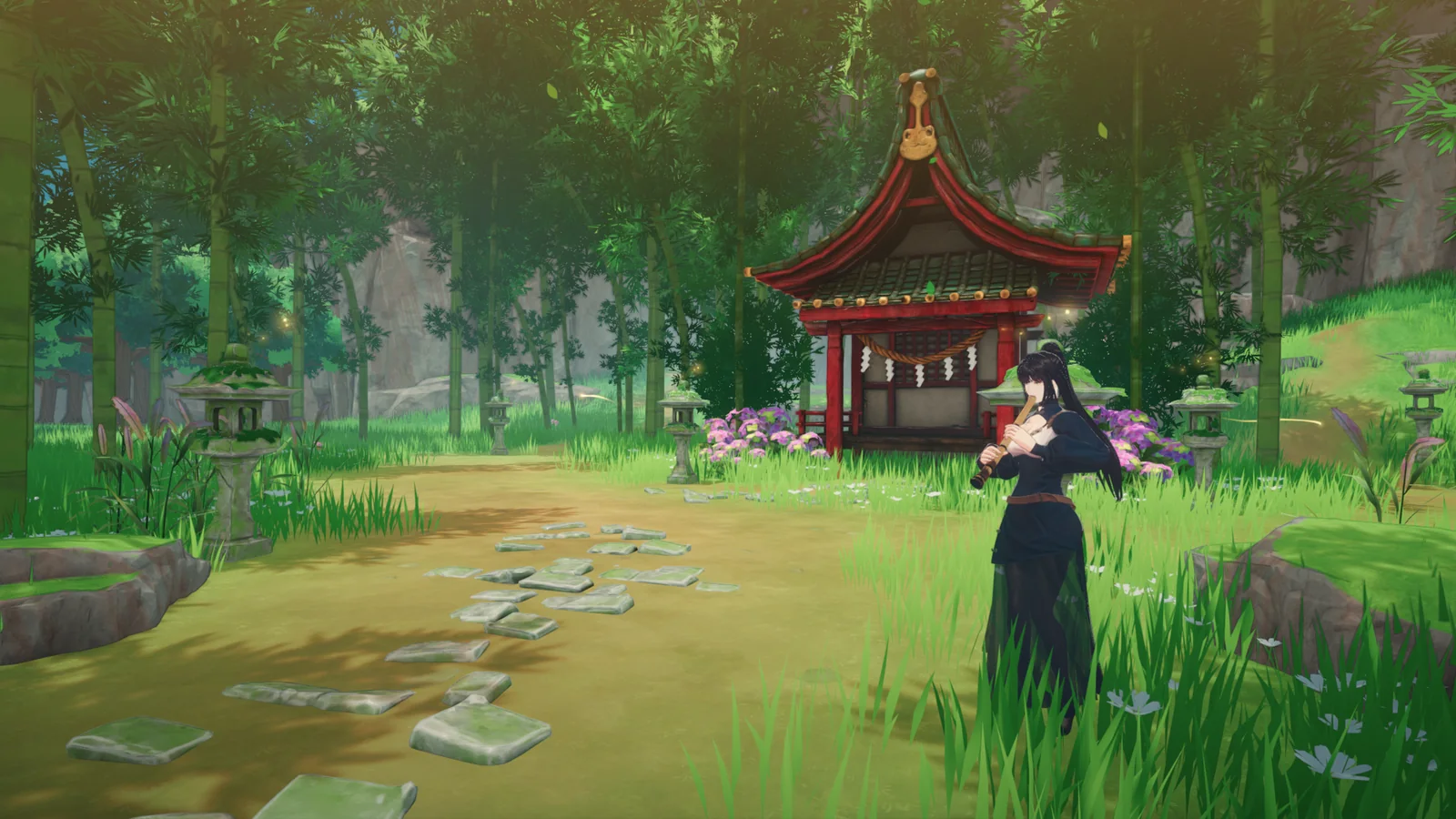
Exploration is easier when you allow some discoveries to remain questions. An unusual route, ruin, hidden-looking edge or underwater space may make more sense after the game introduces another capability.
Version 1.0 officially adds areas, and transformation systems include confirmed boar, tengu, water spirit and customizable Fox Yokai references. This guide does not reveal exact unlock sequences.
Confirmed exploration spaces
Official descriptions connect transformation to hidden ruins, distant hilltops and sunken treasures. The guide therefore treats blocked paths as return points for a different form or later story step instead of revealing unverified solutions.
Prepare a focused expedition
- Choose one region or unanswered route as the main purpose.
- Clear enough inventory space for unexpected finds.
- Leave routine work in a stable state before a longer trip.
- Plan a return margin instead of using every available moment outward.
Use landmarks, not exhaustive maps
Remember junctions through visible landmarks and the direction of the return path. A short note about an unusual gate, height, current or ruin is often more useful than trying to document every turn on the first visit.
Revisit with a different form
When the game demonstrates a transformation capability, review the environmental questions you saved earlier. Test the demonstrated behavior first and let the game confirm where it applies rather than assuming every suspicious object is part of the same system.
Keep underwater and hidden areas spoiler-light
A useful exploration note can identify that a type of space exists without giving its contents away. Separate route help from reward details, and stop at the layer that matches your preferred level of discovery.
Know when to turn back
If inventory, time or attention is running low, preserve the route as a future goal and return. Completing an expedition is not the same as exhausting every branch; a clean return with a clear next question is meaningful progress.