
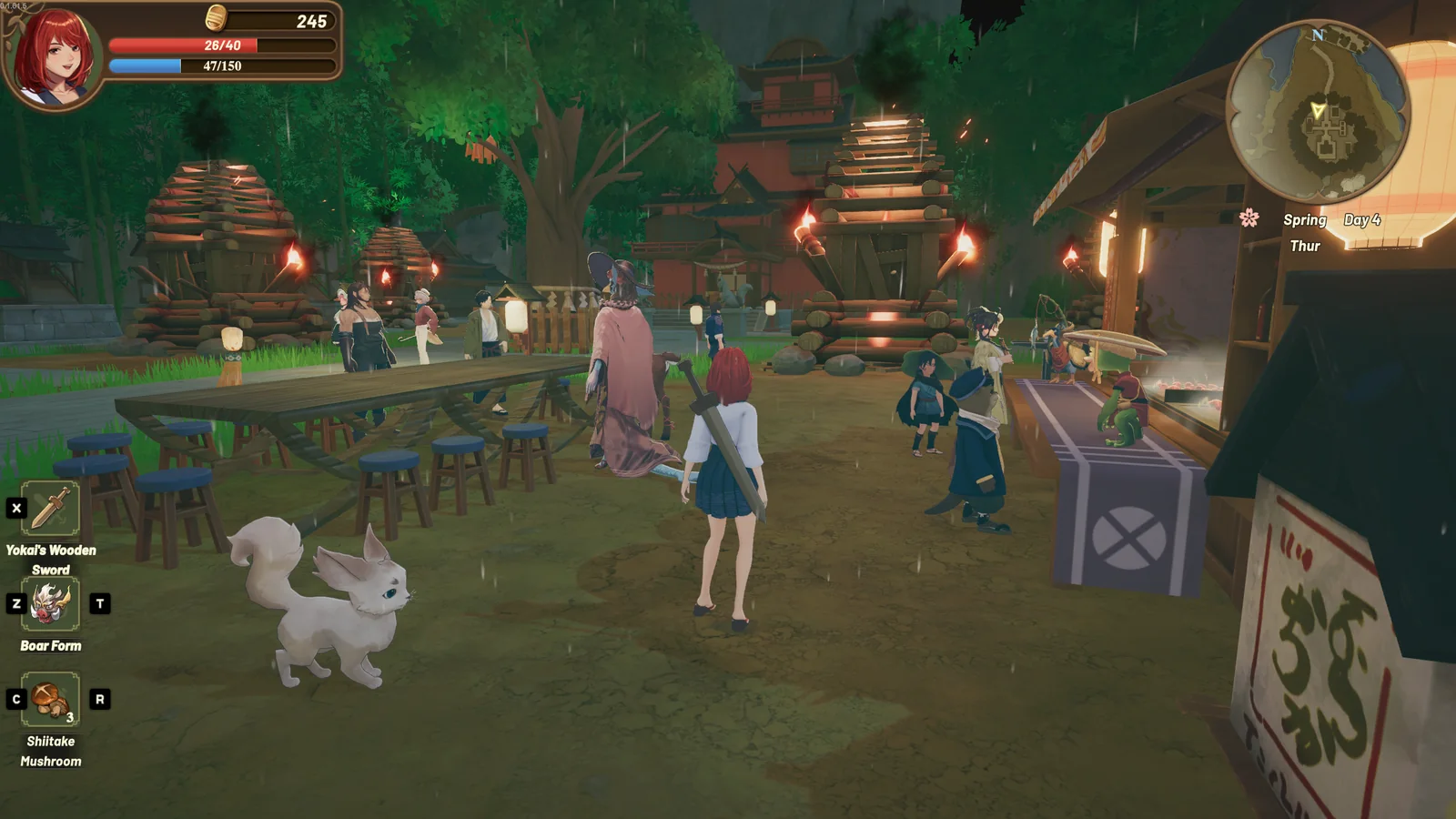
A strong beginning is less about completing every possible task and more about preserving choices. Treat each day as a budget of attention: choose one main objective, leave room for discoveries and stop before routine work consumes the entire session.
This guide avoids exact crop profits, schedules and unlock conditions that have not been independently verified for version 1.0. It instead explains decisions that remain useful as your farm and knowledge expand.
The real game loop
- Restore the old family home and build a workable farm.
- Move between farming, town errands, dialogue, exploration, combat and collecting.
- Use transformation forms to reach places that normal movement cannot.
- Spend time with residents instead of treating the game as a crop spreadsheet.
Plan time around one anchor goal
Choose a single anchor for the day, such as organizing the farm, exploring a route, meeting villagers or gathering for a crafting project. Complete essential upkeep first, then protect a block of time for that anchor. Optional errands can fill the edges instead of displacing the goal.
- Group activities by location to reduce repeated travel.
- Leave a margin for unfamiliar routes and dialogue.
- Move unfinished optional work to another day without treating it as a failure.
Spend stamina with an exit plan
Before a stamina-heavy activity, decide what success means for that outing. Clearing a small usable patch or collecting enough material for one known purpose is easier to control than exhausting stamina on open-ended work. If the next action has no clear benefit, pause and reassess.
Keep a reserve before selling or crafting
Early materials often compete for several uses. Retain a modest sample of unfamiliar items until you understand their role, and separate resources assigned to a current project from general stock. This lowers the chance of selling something and immediately needing to gather it again.
- Use simple storage groups such as farm inputs, food, crafting materials and items awaiting identification.
- Avoid filling every slot with low-priority duplicates before an exploration trip.
- Review stored items periodically so caution does not become permanent clutter.
Balance exploration and relationships
Exploration reveals context and opportunities, while regular conversations help relationships develop naturally. Neither needs to dominate every day. Combine a social pass through a settlement with a nearby objective, and give a dedicated day to a longer expedition when you can leave routine work in a stable state.
Measure progress by options opened
A useful first week leaves you with organized storage, a manageable routine, several understood routes and a short list of personal goals. Raw completion is less important than knowing what you can do next and why you would choose it.